
Billionaire Tax Not the Only Proposition Targeting the Wealthy
What do Meta’s Mark Zuckerberg, Nvidia’s Jensen Huang, Google/Alphabet’s Larry Page, Palantir’s Peter Thiel, and Irvine Company’s Donald Bren have in common? They all live in California, they’re multi-billionaires, and they’ll be getting a 5% wealth tax if voters approve it in November.
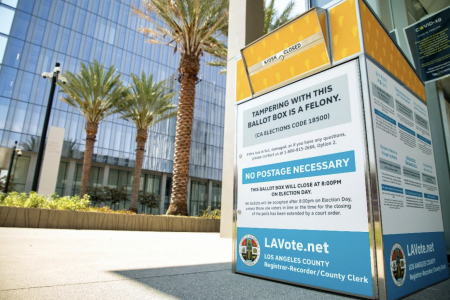
On Tuesday, Nov. 3, 2026, California voters will be deciding if Proposition 40 becomes law. It would levy a one-time 5% tax on accumulated wealth, including shares of capital stock, bonds or similar funds, and any legal or equitable interest, of billionaires in the state to cover state-funded healthcare programs such as Medi-Cal.
It could affect more than 200 wealthy Californians, and it would have to be paid over five years. Ninety percent of the revenue would go to pay for healthcare for low-income Californians and 10% toward education and food assistance programs, according to Cal Matters.
It’s not the only ballot initiative that we’ll be reviewing and voting on in November that addresses taxation for the wealthy. Two other propositions appear to have been brought to the ballot in response to the stir that Prop. 40 had generated, with both designed to undercut the billionaire tax if it passes. Two other ballot initiatives also address taxation.
For some analysts, this potential wealth tax raises red flags about possible damage that could be done to the state’s strong economy. Some of them might bring up Tesla and SpaceX CEO Elon Musk leaving California and moving to Texas with complaints about high taxes, strict corporate and health regulations, and for him, social policies that he personally disagrees with.
It didn’t trigger a mass exodus of Tesla and SpaceX jobs from California to Texas, but several other companies were already going the route – or had already done so – by moving everything to Texas or other states and shutting down operations here in California.
Prop. 40, called Save California Health Care and Public Education, is sponsored by the SEIU-UHW union, which has been leading the campaign in support of the initiative. It has been endorsed by U.S. Sen. Bernie Sanders (D-VT), U.S. Rep. Ro Khanna (D-CA), California Democratic Socialists of America, Teamsters California, and UNITE HERE Local 11. SEIU-UHW has said that the ballot initiative is in response to steep healthcare funding cuts resulting from President Donald Trump’s “Big Beautiful Bill.”
‘No on the So-Called Wealth Tax’ is leading the campaign in opposition to the initiative. U.S. Rep. Kevin Kiley (R), Gov. Gavin Newsom (D), Republican gubernatorial candidate Steve Hilton, Democratic gubernatorial candidate Xavier Becerra, the California Teachers Association, State Building and Construction Trades Council of California, and Planned Parenthood Affiliates of California, oppose the initiative.
The No on the So-Called Wealth Tax group has been led by U.S. Rep. Kevin Kiley, who serves the 3rd district in eastern California, Gov. Gavin Newsom, and San Francisco Mayor Daniel Lurie. Google co-founder Sergey Brin has also played a leading role in organizing opposition through other ballot initiatives.
Ironically, Newsom, who is expected to announce his candidacy for president in 2028, on June 26 released a statement that the federal government should increase taxes for the rich. That would come about by returning to pre-2017 corporate tax rates, closing offshore loopholes that allow multinationals to shift profits and pay less in taxes, and it would also involve rewriting inheritance tax laws, according to ABC News.
Fourteen ballot initiatives qualified for the November ballot and were approved by the California Secretary of State. Nine that qualified as ballot initiatives address taxes, housing, business regulations, voter ID, and spending by healthcare organizations.
The California state legislature also referred five measures to the ballot – a bond for housing assistance programs; an amendment that would eliminate the successor election at a state officer recall election; a law that would authorize public financing for state and local campaigns; an amendment to require a two-thirds supermajority vote for special tax initiatives; and an amendment to increase the state’s Budget Stabilization Account cap from 10% of general fund revenue to 20%, according to Ballotpedia.
Other Taxation Issues
What do the other November ballot propositions look like? California’s Secretary of State website shows qualified statewide ballot measures, and CalMatters provided some of the coverage and analysis. The first two have been tied to the “billionaire tax,” and two more ballot initiatives address other taxation issues.
Proposition 41: It would audit programs funded by new state special taxes, and it would prohibit new state taxes that are excluded from existing voter-approved state spending caps. This one came in response to the billionaire tax proposal, and it would require state audits of programs funded by new taxes. It would effectively cancel out the billionaire tax proposal. If voters approve both measures, the one with more votes will prevail.
Support has been primarily funded by Google co-founder Sergey Brin and venture capitalists John Doerr and Michael Moritz, Reform California, and California Chamber of Commerce. Building a Better California has also been a supporter. That nonprofit organization is dedicated to advancing public policies that support middle-class housing, cut bureaucratic red tape, and secure funding for public education. Advocates of the billionaire tax proposition have been the chief opponents.
Proposition 42: This ballot initiative would prohibit new personal property tax and retroactive taxes. It’s also aimed at undercutting the billionaire tax proposal. It would prevent new taxes on personal property, which would offset the wealth tax. If both pass, the one with more votes will prevail. Supporters include Building a Better California, Reform California, the State Building and Construction Trades Council of California, and California Chamber of Commerce. Like Prop. 41, opponents have been advocates of Prop. 40, the billionaire tax initiative.
Proposition 3: This measure seeks to make permanent a temporary income tax – up to 12% – on high earners that voters approved in 2012. This tax applies to household income over $721,000 for couples and over $360,000 for individuals. The tax is thought to generate between $5-$15 billion each year for K-12 schools and community colleges. It is set to expire in 2031. Supporters are the California Teachers Association, and California Federation of Teachers and California School Employees Association. The California Taxpayers Association has been opposed to it.
Proposition 43: This would raise the threshold for citizen-driven special tax ballot initiatives to pass from a simple majority to two-thirds, making it harder to impose or increase taxes – placing a higher threshold on special local taxes. The measure, placed on the ballot at the last minute by state lawmakers, reflects a deal state leaders struck with Howard Jarvis Taxpayers Association and California lawmakers.
Jon LeSage is a resident of Long Beach and a veteran business media reporter and editor. You can reach him at jtlesage1@yahoo.com.
Category:
- Log in to post comments
Featured Video

Beachcomber
Copyright 2026 Beeler & Associates.
All rights reserved. Contents may not be reproduced or transmitted – by any means – without publisher's written permission.

