
Hacegaba Selected as Port CEO
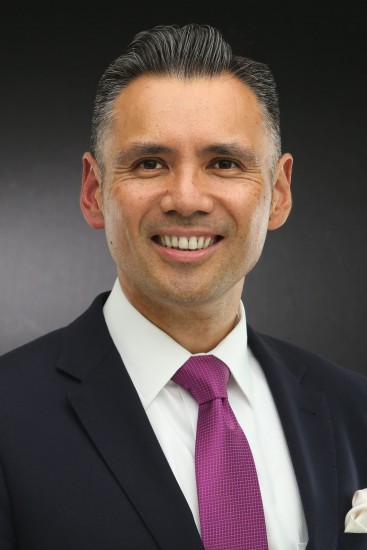
Incoming Chief Executive Officer Dr. Noel Hacegaba of the Port of Long Beach will be giving the annual State of the Port speech on Jan. 15, 2026. That will be soon after CEO Mario Cordero steps down after having served in that role for nearly nine years.
It will be taking place as the port faces uncertainty with the tariffs and the global economy, but so far planning ahead has paid off.
“Cargo moved at a steady rate with no congestion or disruptions at the Port of Long Beach as consumers, businesses and supply chain partners endured an extraordinary amount of uncertainty caused by shifting trade policies throughout 2025,” Cordero said in a statement. “We will continue to move trade smoothly through the end of the year and look forward to a moderate increase in cargo for 2026.”
Goods moved before the tariffs started earlier this year and made sure adequate supply was in place. Now it’s on course to have its all-time busiest year, exceeding the record-setting 9.6 million cargo containers moved in 2024, according to the port.
The Long Beach Board of Harbor Commissioners confirmed Hacegaba as the incoming CEO on Dec. 9. That will be effective on Jan. 1, 2026. For several years, Hacegaba served as chief operating officer during an era of significant growth at the nation’s second-busiest seaport.
Hacegaba gave testimony in Washington, D.C., on Wednesday, Dec. 17, before a House subcommittee on the Water Resources Development Act, according to the port. Continued federal investments in seaport infrastructure projects spur economic growth and jobs across the U.S., he said, which would be supported by continuation of the WRDA.
The Port of Long Beach had tapped in the 2022 WRDA reauthorization for engineering and design for its Channel Deepening Project. It will provide deeper, wider channels to speed goods movement and improve the environment.
“The policies in the WRDA have allowed the Port of Long Beach and other seaports across the country to move cargo more efficiently and compete in the global supply chain,” Hacegaba said. “This legislation is essential to our country’s economy and national security.”
Over the past 15 years, Hacegaba has negotiated high-profile transactions for the port, including the multibillion-dollar sales of Long Beach Container Terminal and Total Terminals International. During the pandemic, Hacegaba directed the Business Recovery Task Force and coordinated with industry, labor and government partners to keep cargo moving. He led development of the port’s Supply Chain Information Highway, a digital platform designed to improve cargo visibility and data sharing across the national freight network.
Hacegaba earned his doctorate in public administration from the University of La Verne. Prior to that, he attended USC where he took undergraduate and graduate degrees in economics, business administration and planning. Earlier this year, he received the prestigious Stanley T. Olafson Award from the Los Angeles Area Chamber of Commerce for his exemplary leadership in advancing international trade.
Hacegaba has also served on external industry boards, including the Intermodal Association of North America (IANA) board, having previously served as chairman; Coalition for America’s Gateways and Trade Corridors; American Association of Port Authority’s Professional Development Board; and boards for the Marine Exchange of Southern California, Harbor Association.
“The Port of Long Beach is entering a pivotal decade, one defined by bold climate action, digital transformation and generational infrastructure investments,” said Mayor Rex Richardson. “I congratulate Dr. Hacegaba on his appointment and I am confident that his deep experience will help guide this next chapter as we advance toward zero-emission operations, strengthen our global competitiveness and continue creating economic opportunity for our community. I look forward to working together to build the port of the future and elevate Long Beach’s leadership in sustainability and innovation.”
Steinke’s Experience Tapped
“I know that I am leaving the port in very capable hands with Noel at the helm, following his many years as my right-hand man,” Cordero said in the announcement on the new CEO being approved by Long Beach Board of Harbor Commissioners. “Noel has the talent and collaborative approach to drive competitiveness and accelerate our zero-emissions goals during a period of tremendous growth at the port.”
On a new edition of the Port Update podcast, Cordero interviewed Richard Steinke, who served as the port’s executive director from 1997 to 2011. He asked him to share lessons learned with the new CEO and the port community.
Steinke says that China began expanding rapidly during that time, with many factories opening there and goods movement growing by leaps and bounds – and much of it coming through the Port of Long Beach. The port had to redevelop and add new terminals. The old Union Pacific resources oil property in north harbor area was one of them where the port bought that land, redeveloped and remediated it, and created new terminals. The port also developed the closed Navy station and shipyard. More marine and ocean carrier terminals were built.
“Growth was the easy part,” Steinke said. “There was also recognition that the impact on the community was significant – traffic congestion, air and water pollution. We thought we were reacting adequately to address these situations. The community had another idea about all of it,” he said.
From multiple community meetings with public comments, the port clearly realized that it needed to take positive actions in order to regain the respect of the community. It became the seeds of growth in taking an environmentally responsible approach to growth.
The local community didn’t know much about the port – goods movement, the logistics, how goods got from one point to another. They had to engage the community, and to explain to them what they would be doing to mitigate the impact. That’s when the Green Port policy started coming together, he said.
That became a game changer for engaging the community and increasing the confidence of environmental groups. They started delivering actionable items and then reporting back to the community, which started being acknowledged by these groups at their public meetings. This gave them the license to continue to operate, he said.
The port moved 9.6M TEUs (twenty-foot equivalent units) in 2024, Cordero said.
“We may be moving a little bit more than that this year, even with the tariffs and geopolitical environment,” he said, and which the port later confirmed.
The new Port of LB CEO will have to deal with factors you don’t have control over such as tariffs and environmental laws. But they’ve been able to create what Steinke describes as a “well-oiled machine.”
“You had those, as did I,” Steinke said. “You take it on the chin and move forward on it. The foundation, the bedrock, that’s been built, provides a strong base to move forward.”
Expanding the port’s intermodal infrastructure to move containers from marine terminals to trains will be one of Hacegaba’s top priorities next year. Long Beach will be putting much of its $3.2 billion capital improvement program over the coming decade to rail infrastructure.
During the spring, the port approved the 2026-2035 capital improvement program that designated over $1.28 billion, about 40% of the total $3.2 billion plan, for the Pier B on-dock rail support facility. Construction of the rail facility had begun in 2024, and completion is expected in 2032, the port said.
Jon LeSage is a resident of Long Beach and a veteran business media reporter and editor. You can reach him at jtlesage1@yahoo.com.
Category:
- Log in to post comments
Featured Video

Beachcomber
Copyright 2026 Beeler & Associates.
All rights reserved. Contents may not be reproduced or transmitted – by any means – without publisher's written permission.

