
Outer Limit’s Kari Barba on Tattoo History, Creativity and Tech Evolution
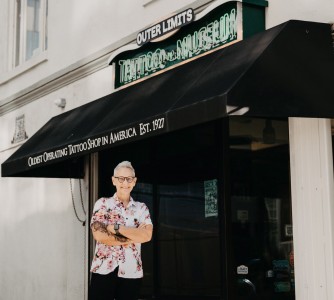
If one were curious to know what stands today as the most historically enriched tattoo shop in the United States, then one would be surprised to find that it is centrally located in the downtown streets of Long Beach.
Situated underneath condominiums on the first floor of the Sovereign Building, the studio has existed since 1921, six years after being designated as a photography studio. It is the only one of the 12 tattoo shops that remains from the Pike’s glory days. A historic seaside amusement area that has been almost entirely demolished since 1979, since the shop is still operating today.
Many individuals in this industry have a passion and dedication to the art form of tattooing. And Kari Barba, the owner of Outer Limits Tattoo, has seasoned knowledge of the journey of this craft from its underground status to mainstream acceptance.
Barba agrees with the importance of creativity, believes in emotional connections with clients and is not shy about exploring the industry’s technological advancements. At the same time, Barba is fascinated with the significance of AI’s role in advancing the craft and knows the risks associated with its involvement in the industry.
Barba reflects on the historical events that transpired for the Pike’s eventual demise, for “the war ended and the Pike area started to diminish in popularity,” said Barba. Barba further states, “It started getting a little seedy in some of the areas in the pike, so the city decided to demolish it and remodel a lot of the criteria.”
And what initially saved the Pike’s last link is “because of the condos up above us,” For the city wiped out everything and started rebuilding,” said Barba. This, in effect, made Outer Limits, which had gone by a different identity at the time, “the last remaining tattoo shop in the area and the last continuously running tattoo shop in the nation.”
Barba started tattooing in 1979; coincidently, the same year, the plans for demolition were set in Long Beach’s Pike. Barba reflects that a couple of years prior in Minnesota, “there wasn’t a lot of tattooing going on there.” However, around this time, Barba noticed the culture and art form in biker magazines, which eventually caused her culture’s popularity to rise. Barba says, “Tattoo magazines actually came into play.” However, “it was kind of a taboo thing, for most people were afraid of tattooed people or tattoo shops.” So much so that Barba says, “People would go into shops and be a little bit intimidated by the people in there.”
However, with the culture continuing to expand and become more accepted in the “public eye through media, especially through TV, you started to feel more at home with it,” says Barba. The evolution of what can be accomplished through technological advancements in the industry has been prominent. Barba notices that “Styles have progressed through the years, so you get a lot of progression in the details of what can be done with tattoos.”
One sense of a trend of increased comfortability to the culture that Barba connects to is “people who used to hide tattoos” in professional fields, revealing and showing them. “They don’t hide them anymore,” for many of the tattooed art by associates are visibly displayed and expressed in contrast to before.
Under the leadership of Barba and Matt Hand, an initiative is emplaced to preserve the traditional feel present in the shop. Specifically in connection with the Pike and Naval Base, which used to exist in the foreground of the area’s history.
Barba says, “Instead of completely modernizing it, we only modernized it enough so you could still have that naval feel when you come in.” Barba’s goal in representing the shop this way is to “represent and honor the past of Long Beach being a port city.”
Tattoo art has inspiration from many sources, and “the clients themselves bring in a lot of it,” says Barba. Barba explains that the client will “come in with the idea or the inspiration to tell a story about their life or represent an art they love.”
But if one were curious to know which style of tattoo art Barba loves, it would be realism, for she would explore nature as a young kid and draw trees and birds. Entranced by the beauty of nature subjects like flowers and forest scenery, Barba’s vision of tattooing that style of art onto others transpired.
In addition, Barba’s draw of inspiration for clients’ tattoo art “can come from anywhere.” For Barba elaborates on this by stating, “It comes from the mixing of minds, from the client’s artistic ideas mixed with my artistic ideas.” Often, the source of inspiration can also arise from brainstorming ideas together in the shop by discussing them with various people. By engaging in these conversations with different artists and clients in the shop. Together, they can share diverse perspectives and ideas, which can spark new and creative concepts for tattoo designs in the future.
Outer Limits has been home to “Very touching moments with clients,” Barba says. Recently, she has worked on sensitive works that involve “portraits of deceased people and pets, where the client has become very emotionally involved with the tattoo while getting it.”
For the artist, these moments can be gratifying and challenging. They must execute the technical aspects of the tattoo and provide emotional support and understanding throughout the process. This dual role of artist and confidant can lead to strong bonds and memorable experiences and transform the idea of a tattoo being an art form into something much greater.
The advancements in the industry that Barba experienced started with Flash, a hands-on system that relied on designs displayed on the tattoo shop wall. “Then you fast forward, people started drawing more and more of those, and it became into books,” Barba explains.
Then there was the iPad, or the computer, where you could operate a system called Tattoo Smart, where one would create designs you could animate through the software.
“But now there’s AI, where you can put your idea, a photo, or anything to create even more ideas.” This, in effect, makes Barba believe that AI is “the biggest advancement in the history of man”; however, “it depends on what you do with it.”
Matt Hand, the manager of Outer Limits, weighs his opinion on AI and believes that there is a negative connotation with using AI to develop tattoo artwork but denounces it by explaining, “As long as you’re not necessarily just using that as the whole tattoo, I think that’s fine. But understands the dangers of how people post AI tattoos, specifically in cases where “An AI-generated image of a tattoo on someone’s skin and posting it as if someone has done this tattoo is misleading,” says Hand.
Advancements in tattoo machines, supplies and especially AI are revolutionizing the tattooing industry. These developments enhance the artist’s capabilities, streamline the tattooing process and expand creative horizons. In effect, AI is a pivotal factor in the future of tattoo art as long as it does not mislead an audience in artwork that does not exist to try and manipulate the community and future clients.
Outer Limits has been in the works of creating a museum that will be named the Tattoo Heritage Museum. Other tattoo artists and Barba formed a board and are trying to establish a tattoo museum in Long Beach. And Barba and the board have visited the Queen Mary, a potential museum hosting spot. Along with possibly establishing the museum in the Ocean Center Building, which is located at the corner of Pine and Ocean. According to Barba, “This museum will host permanent collections and collections that tour all over the world and will be the only tattoo museum in the world that is not within a tattoo shop.”
Outer Limits Tattoo is a testament to the rich history and continuous evolution of tattoo artistry in the United States. Nestled in the heart of Long Beach, this enduring establishment bridges the past and present, honoring its deep roots while embracing modern advancements. Under the leadership of Kari Barba, Outer Limits has not only survived but thrived, maintaining a commitment to creativity, emotional connection and technological innovation.
From the legacy of the Pike to the cutting-edge use of AI in design, Barba and her team ensure that each tattoo is a unique blend of tradition and progress. For those passionate about tattoo art and history, Outer Limits represents a living legacy, a place where the past and future of tattooing come together to create something truly extraordinary.
Category:
- Log in to post comments
Featured Video
Beachcomber
Copyright 2026 Beeler & Associates.
All rights reserved. Contents may not be reproduced or transmitted – by any means – without publisher's written permission.

