
Planning for Open Streets
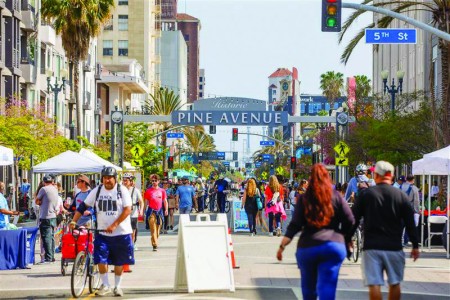
The concept of Open Streets requires a definition. The open part means making the street fully open to pedestrians, skaters and skateboarders and non-motorized bicyclists, while being closed to motor vehicles.
Long Beach has been doing versions of this for years. The city’s Beach Streets history describes the idea as an invitation to reconsider streets as public spaces rather than simply places for cars to pass through.
Beach Streets closes major corridors to automobiles so pedestrians, bicyclists, skaters and families can take them over. In 2026, the event included portions of Pine Avenue, Broadway, Cherry Avenue and Fourth Street.
Long Beach streets are regularly closed for the Long Beach Grand Prix, the Marathon, the Gay Pride Parade, the Belmont Shore Car Show in September and the Belmont Shore Christmas Parade in December among other regular street closings. This month, one of the most popular locations for limited closings, Pine Avenue between Third and Broadway will be closed on August 22 for Taste of Downtown from 2 to 10 p.m. In July, an East Long Beach resident visited downtown Pine Avenue, noting the route was closed to through traffic to allow for celebrants and fans during World Cup festivities.
Block party permits cost a minimum of $100 from the city’s Special Events & Filming and require 66 percent of affected residents to approve. No block parties are allowed on December 31.
In Europe, sections of various cities open streets and parking lots on a daily basis to accommodate outdoor dining and various other activities. And in New York City, there’s the 34th Avenue Open Streets project, a 1.5-mile public promenade where people walk, cycle, play, exercise and gather with neighbors.
Created during the height of the COVID-19 pandemic, it offered residents a safe place to walk, bike, gather, breathe and reconnect. As the city emerged from the pandemic, neighbors recognized that this new public space had become essential.
Now there’s a new move to open certain Long Beach streets along the lines of this plan. In the New York example, it would be more than Beach Streets, it could mean permanent daytime closures to motor vehicles of all sorts.
Alex Jung, director of urban design and planning for the non-profit, Cityfabrick said, “a demonstration toward a permanent installation would be the long term goal. But the city should test out the idea before making it a permanent installation.” Areas that might be considered are the current Beach Streets, downtown and central Long Beach.”
Jung cited an example. “In early 2021, we did a demonstration on Rhea Street at Long Beach Boulevard. It was paid for and maintained by the existing development, The Spark at Midtown,” a 95-unit affordable and supportive housing community. “We closed it down for a day. It was a whole celebration to show what it would feel like to turn a street into a park. We learned a lot, we should move ten feet this way or do something another way. Sometimes what we do and when we do it, it gets people inspired. Rhea was converted into public space through public works, not the parks department, supporting them on affordable housing.
“Just to the east is Cambodia Town. A nearby mortuary does a lot of Cambodian funerals.” Said Jung, their tradition is for the funeral party to “do a walk around the building. In this case, we provided sidewalks and street improvements, which helped us with design challenges we had not expected.”
“During the pandemic there were closed streets and open streets. When Pine Avenue was partially closed down, funding was necessary for vendors. Then we ran into getting event permits. Certain city fees were waived. Long Beach has been open to these issues. Getting things waived is pretty good.”
Jung worked with the Health Department during COVID and the Parks Department during opening Rhea Street. He’s working with Advanced Planning Bureau on the 14th Street and Long Beach Boulevard Project.
Then there’s Cudahy in the southwest cities area. The plan was to open the Clara Street Bridge over the L.A. River, with hopes of involving 3,000 people, one month ago. “Cudahy tacked on as many fees as possible. For some cities, parking is an issue. There was nominal impact in Cudahy. With a regional draw, parking can be impacted, encourage Metro or bike riding. It can miss some people, so there’s always a plan B or allow residents to drive in.
“One of the biggest challenges is where do customers go? Businesses are hesitant. Around 2015, the City of Los Angeles was doing CicLAvia.” A Bogata, Colombia firm partnered with UCLA to measure small business impact on the day of the event. Depending on the kind of business, it had a healthy increase in walk-ins, said Jung.
On Wednesday, August 26, the documentary “Close Encounters of the 34th Avenue Kind” about the New York City open street project will be screened at the Art Theatre followed by a discussion.
To attend, RSVP at Placemakingus.org
Category:
- Log in to post comments
Featured Video
Beachcomber
Copyright 2026 Beeler & Associates.
All rights reserved. Contents may not be reproduced or transmitted – by any means – without publisher's written permission.

