
Will Tariffs & Oil Prices Impact Holiday Shopping?
The state of toy sales offers an excellent overview of what the economy and its supply chain can expect for this holiday season and beyond. The story has taken a turn with President Donald Trump recently raising tariffs once again – and as oil prices stay high during the conflict with Iran.
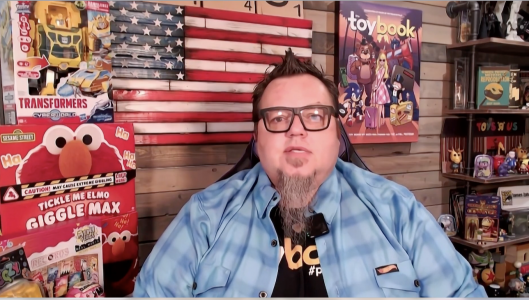
The August 19 podcast, Supply Chain Insight with Port of Long Beach CEO Dr. Noel Hacegaba, this time featured a conversation with James Zahn, Editor-in-Chief of The Toy Book about the upcoming holiday season.
The Port This Year
It started with Hacegaba presenting an overview of how the Port of Long Beach is doing overall. The July numbers had just come out, and the month marked the final push by retailers and shippers to move cargo before a new round of tariffs that were announced during that month.
“Our strong import numbers show that the supply chain continues to be resilient and adapting to this new normal,” Hacegaba said. “And through it all, shippers have turned to the Port of Long Beach because of our efficiency and reliability.”
Dock workers and terminal operators moved more than 928,000 TEUs, down 1.7% compared to July 2025, but still making it the second busiest July on record for the port. That month made for the fourth strongest month in the port's 115-year history. It was just the seventh time that the port surpassed the 900,000-TEU mark for a single month. Imports were down slightly while exports soared 14.8% to nearly 105,000 TEUs. (TEU stands for twenty-foot equivalent unit, which is the standard unit of measurement used in the shipping and logistics industry to describe cargo capacity.)
Another telling sign: the Port of Long Beach has moved nearly 5.76 million TEUs so far this year. That places the port 1.2% ahead of the record amount of cargo that it moved in 2025.
The Trump administration imposed tariffs that roughly remain in the same range seen for much of this year. Although the latest tariffs affect more than 90% of all U.S. imports, the port doesn’t expect it to significantly impact trade at the San Pedro Bay Ports Complex.
The supply chain has learned how to take a punch, Hacegaba said, from tariffs, wars, and shocks and disruptions. Businesses aren't freezing anymore. They're adjusting and they're moving.
“Retailers, manufacturers and cargo owners tell us that they're diversifying, sourcing, adjusting inventory strategies, and building flexibility into their supply chains,” he said. “We're keeping an eye on several factors that could influence cargo volumes in the months ahead, including global economic conditions, consumer demand, trade policies, and geopolitical developments. We're also monitoring fuel prices, their impact on the cost of moving goods, and the overall effect on consumers.”
By the start of August, the cost of oil plummeted as negotiations ramped up again between the United States and Iran. Since then, a stalemate has been causing prices to rise again.
This has taken place in the larger context of an economic roller coaster, with consumers feeling uncertainty and making it difficult to budget for food, clothes, and other essentials.
“According to CNBC, grocery prices are 33% higher than in 2019, prompting shoppers to buy less and think twice about what they're putting into their shopping carts when transportation costs rise,” Hacegaba said.
Hacegaba also talked about how in the first part of August, the port agreed to purchase the 13-story office building at 100 Oceangate for $36 million. It came through Mayor Rex Richardson’s AnchorLB initiative. The Port of Long Beach is taking this step in acquiring a commercial office property to create a hub for companies connected to maritime trade. The maritime business hub designed to attract investment, spur innovation and generate new opportunities for local businesses in our community.
“If you're a supply chain company looking for new office space or even a new home for your headquarters. Come talk to us. We'd love to have you right here in Long Beach,” he said.
Toy Market Overview
August is when retailers start finalizing plans for Black Friday and beyond, making it a great time to hear from someone who knows the ins and outs of the toy industry, Hacegaba said.
Along with editing The Toy Book, the official trade publication covering deals, trends and innovations in North America's toy industry, Zahn is also senior editor of the Toy Insider consumer guide.
Zahn says that looking at the toy market has gotten more complex lately versus 30 years ago, when the Tickle Me Elmo toy came out and chaos took over when everybody was looking for that holiday gift. That product has resurged lately in its new version, but the list of purchase choices has gotten much longer.
“Now, with the way the world has evolved and with entertainment and all the different options that kids have, there may not be a singular got-to-have-it toy for every boy and girl on the planet. So when we look at those things, we think of maybe a hot 20,” Zahn said.
You can take a good look at the market through sensory, squishy toys like the NeeDoh Nice Cube.
“That category is doing triple digit growth through the first half of the year. And NeeDoh is leading that conversation. It's made by the Schylling toy company. This is not a new product. It's a product that's been on the market since 2017,” he said.
Zahn says the reason why these sensory toys are hot is because they play into different interests and needs, and not just for children. It can include neurodivergent individuals, such as people with ADHD who use it for therapy. It could be seniors using these toys because they want to keep their mind sharp, or maybe work on keeping the dexterity of their hands, he said.
Hacegaba asked about other popular toys that we're all hearing about.
“We're hearing about MGA's Miniverse Real Music Record Player, and KPop Demon Hunters collectible trading cards, even Transformers, which have been around for decades,” Hacegaba said.
These are all brands that have been around a long time, but now they’re infusing it with entertainment, Zahn said. A great example is the biggest movie in Netflix’ history, ‘KPop Demon Hunters’, which came out just over a year ago. Now kids want to collect the trading cards. And it's not just the kids – teens, “tweens,” and grown-ups also like trading cards, and the market is doing the same thing that they would do with sports cards where they go way beyond just collecting and trading them in terms of products out on the market.
“People need to have fun. There's a lot of serious things going on in our life, in our world, and this offers an escape. And there are infinite ways you can go with what's going to make you happy,” Zahn said.
For ports in the U.S., toys are big business for the supply chain. It ranks as one of the top imports for the Port of Long Beach, especially at this time of year. With plastics, which come from oil, being a significant part of production, how are costs being affected for toy manufacturers?
Zahn and his editorial team have been hearing concerns raised about the rising cost of plastics starting around April. It’s been a 10-to-15 percent raw materials cost increase for the oil that’s being made into plastic.
Zahn thinks that one of the one of the best things about the toy and game industries is that you have some of the most creative minds on the planet. Instead of just waiting for things to happen, they’re being proactive and figuring out ways to mitigate the impact.
“The last thing this business wants to do is put things out of reach for kids and families,” Zahn said. “They want to have great play experiences that are affordable and accessible.”
“Sometimes as we've seen through tariffs and all, they'll work with their partners. Maybe there's a distributor in the mix. Maybe they're going direct to retail. They'll do a little wheeling and dealing, and see what they can do it without killing the margin, because it's already a tight margin business” he said.
Last year, there was a lot more uncertainly about the impact of the tariffs, and toy makers are more ready this year, he said.
Counterfeit Toys
While tariffs and energy prices steal our attention, another issue facing toy manufacturers has been counterfeits. There’s been concern about some overseas factories making extra revenue from turning over the night shift to “bootleggers and knockoff artists,” as Zahn calls them.
“This is a huge, huge problem,” Zahn said. “And that sensory toy, that squishy toy category, has just been hammered by counterfeits. This year, I just reported on a story for The Toy Book about a week and a half ago, about a massive counterfeit bust at one mall in South Carolina, more than $214,000 worth of counterfeit squishies.”
Two giants have been impacted by all of it: Mattel and Hasbro.
“We saw it last year with KPop Demon Hunters, the licensing deals to make the actual dolls and figures, which are coming out largely from the two big titans, Mattel and Hasbro. Those deals weren't even inked yet, and knockoffs were flooding third-party marketplaces on reputable retail sites,” he said.
Major U.S. retailers are setting up what they call “brand protection teams” to make sure counterfeit products don’t end up on their shelves or their online order distribution systems. Bootleg products can sometimes show up right next to legitimate products during online searches, he said.
Toy manufacturers have to stay connected to their supply chain partners to avoid these disasters.
“It's such a big problem that involves so many different people. It ends up being hard to manage from a manufacturing standpoint,” Zahn said.
Prior to introducing Zahn, Hacegaba also talked about the port’s new partnership with the U.S. Department of Transportation and U.S. Maritime Administration in support of producing more clean energy – exploring small modular reactor technology that could eventually be deployed on barges.
It’s happening through the port’s partnership with startup Bluecore Energy, which is based at Berth 48. This project will need the federal agencies and Long Beach officials to craft safety and oversight rules. It’s part of the port reaching its goal of doubling its container volume by 2050, while also eliminating all of its carbon emissions.
Jon LeSage is a resident of Long Beach and a veteran business media reporter and editor. You can reach him at jtlesage1@yahoo.com.
Category:
- Log in to post comments
Featured Video
Beachcomber
Copyright 2026 Beeler & Associates.
All rights reserved. Contents may not be reproduced or transmitted – by any means – without publisher's written permission.

