
Have Yourself a Merry Musical Christmas
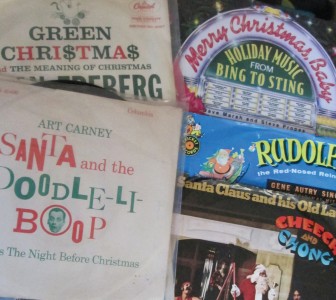
Christmas music as we know it began with Der Bingle’s (Bing Crosby) 1942 mega-hit “White Christmas.” From the movie, “Holiday Inn,” the Irving Berlin composition targeted families who missed their G.I. relatives overseas fighting fascism.
After Nat King Cole was stranded in Long Beach when the traveling musical “Shuffle Along” abruptly closed in 1936, the King Cole Swingsters were hired to entertain sailors at the Pike for $90 a week. Then billed as the King Cole Trio, he hit big with “The Christmas Song” with the subtitle, “Chestnuts Roasting On An Open Fire” in 1946.
Flamboyant entertainer Liberace, who made his “world tour inaugural” at the Long Beach Municipal Auditorium in February 1947, cut his version of “The Christmas Song” in 1954.
Influenced by King Cole, blues crooner Charles Brown who fronted Johnny Moore’s Blazers was implored to listen to a composition by an aggressive fan. Brown’s classic “Merry Christmas Baby” hit in ’47.
A decade later, “Merry Christmas Baby” was revived by Elvis Presley in his Christmas album, by Chuck Berry in 1958 and by Otis Redding backed with “White Christmas” in 1968. Brown gave one of his final performances of the song at the now-missing Ms. Wiz nightclub on Santa Fe Avenue in the late 1980s.
In 1948, pianist Mabel Scott hit a holiday homer with “Boogie Woogie Santa Claus” and Lowell Fulson cashed out his “Lonesome Christmas” in 1950.
“Rudolph the Red-Nosed Reindeer” was born as a Montgomery Ward department store promotion in 1939, a poem given to customers during the season. In 1951, “Rudolph” showed up as a Gene Autry recording after being turned down by crooner Perry Como.
It was among the first records to be issued on both 78 and 45 RPM with a custom picture sleeve. By now, labels had found out that a solid Christmas song could generate income season after season. “Rudolph the Red-Nosed Reindeer” was revived by the Cadillacs in 1956 and by the Temptations in 1968.
After lampooning “Rudolph the Red-Nosed Reindeer,” bandleader Spike Jones who perfected his musical craft a Long Beach Polytechnic High School, came up with his satirical redo of teen singer Jimmy Boyd’s appealing “I Saw Mommy Kissing Santa Claus” in 1952.
In 1953, newcomer Gayla Peevey proclaimed “I Want A Hippopotaumus For Christmas,” Eartha Kitt purred the seductive “Santa Baby,” Babs Gonzales anticipated rap with his “The Be-Bop Santa Claus” and the Moonglows put out the tasty “Hey Santa Claus” in 1953.
Jive-derived titles continued into 1954 when Oscar McLollie & the Honey Jumpers cut “Dig That Crazy Santa Claus.” Jazz legend Louis Armstrong responded with the vocal, “Cool Yule.” Rhythm and blues crooner Clyde McPhatter & the Drifters uptempo rendering of “White Christmas” has dominated the Christmas hit parade for decades. In 1956, the L.A. vocal group The Youngsters backed their hit “Dreamy Eyes” with the droll reading of “Christmas In Jail.”
In 1957, Elvis Presley cut the rocking “Santa Bring My Baby Back To Me” and a revival of Doye O’Dell’s wistful ballad “Blue Christmas.”
Well-known Spanish language satirist Lalo Guerrero debuted “Pancho Claus,” another decades-long holiday hit.
Rockabilly singer Bobby Helms hit with “Jingle Bell Rock,” which four years later the king of the twist, Chubby Checker and Bobby Rydell took to the charts.
Originally billed as “9-Year Old” Brenda Lee, her “I’m Gonna Lasso Santa Claus” was a minor hit, but Lee’s “Rockin’ Around the Christmas Tree” from ’58 rocks to this day.
In 1958, Bobby Rey’s “Rockin’ J. Bells” was “Jingle Bells” with a backbeat. Augie Rios asked “Donde Esta Santa Claus,” also a Salas Brothers hit in 1966 and Chuck Berry took “Run Rudolph Run” for a spin.
In 1959, teen heartthrob Edd “Kookie” Byrnes visited “Yulesville,” comedic actor Jim Backus’s “I Was A Teenage Reindeer” competed with Stan Freberg’s “Green Christmas” condemnation of Christmas commercialization, while the Marquees spent “Christmas In the Congo” and Bugs Bunny voiceover king, Mel Blanc had “Tweety’s Twistmas Twouble.”
The 1960s blues revival included John Lee Hooker’s “Blues For Christmas,” guitarist Freddy King’s “I Hear Jingle Bells” in 1961 and B.B.King’s “Christmas Celebration” in 1963.
Influential vocal groups, the Four Seasons hit with “Santa Claus Is Coming To Town” in 1962 and the Beach Boys with “Little Saint Nick” in 1963. The historic and now rare “A Christmas Gift For You” album on Phil Spector’s Philles label featured Darlene Love on the spectacular vocal, “Christmas (Baby, Please Come Home).”
A most distinctive holiday classic was James Brown’s ”Santa Claus Go Straight To the Ghetto” in 1968 while blues-boogie band Canned Heat dueted with the Chipmunks on a revival of “The Chipmunk Song.” High time for some eggnog.
In 1970, Donnie Hathaway cut the classic “This Christmas” and the Carpenters hit with “Merry Christmas Darling,” a collaboration between Richard Carpenter and CSULB music professor Frank Pooler, who wrote the lyrics as a poem. As Jose Feliciano wished “Feliz Navidad,” Cheech & Chong’s “Santa Claus And His Old Lady” hit in 1971.
Elton John on “Step Into Christmas” was issued in 1973; Jimi Hendrix’s posthumous “Little Drummer Boy” was in 1976. The decade ended with Elmo & Patsy on the smarmy “Grandma Got Run Over By A Reindeer” in 1979, re-recorded in 1984.
Prince cut “Another Lonely Christmas” in 1984 and Michael Jackson was “Up On the House Top” in 1987. In 1982, the punk band Fear cut a Christmas title not appropriate for a family newspaper as did hip hop staple Eazy-E in 1992.
Category:
- Log in to post comments
Featured Video
Beachcomber
Copyright 2026 Beeler & Associates.
All rights reserved. Contents may not be reproduced or transmitted – by any means – without publisher's written permission.

